
Injection Mold Base, Plastic Mould Base, Custom Mould Bases
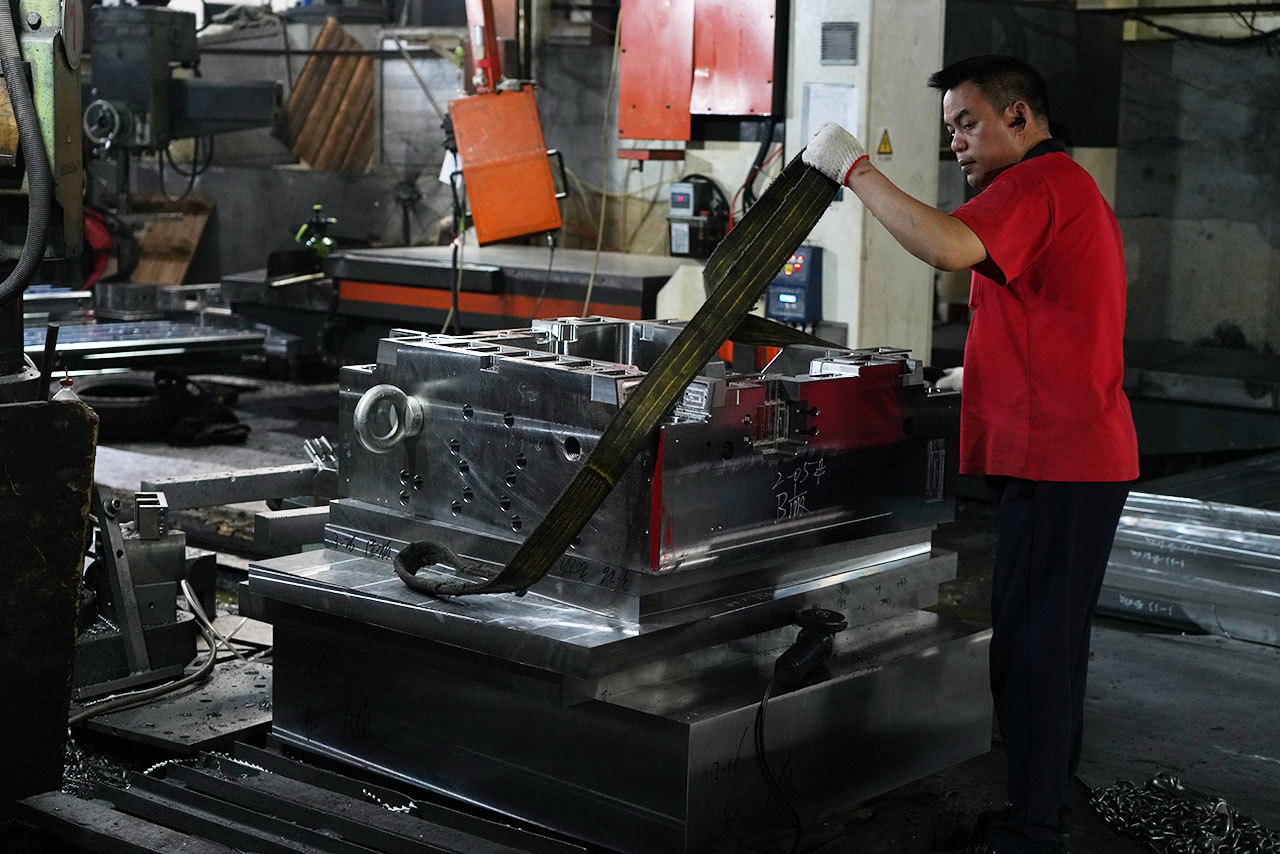
The plastic injection mold base serves as the skeletal framework and supporting structure of an injection mold; it is classified as a semi-finished mold product. Primarily composed of components such as mold plates, guide pillars, and ejection mechanisms, it provides positioning, structural support, and cooling functions for the molded parts. Consequently, it directly impacts the precision of the injection-molded products, production efficiency, and the overall service life of the mold. As a fundamental core component in injection molding operations, the mold base is widely utilized across various sectors—including automotive, electronics, medical devices, and daily consumer goods manufacturing—where users can select between standardized or customized solutions to meet their specific production requirements.
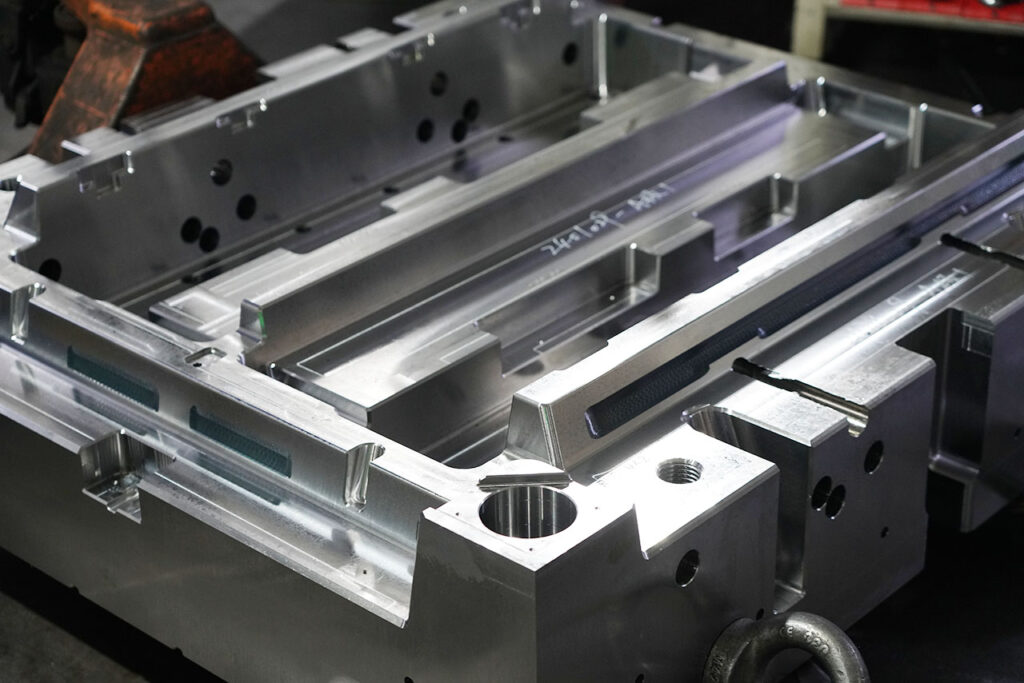
Custom Plastic Injection Mold Bases
From a technical perspective, the design of an injection mold base necessitates a comprehensive consideration of factors such as the mold’s stress distribution, motion precision, and thermal expansion characteristics. The precise fit between the guide pillars and guide bushings ensures accurate directional guidance during the mold’s opening and closing cycles, thereby preventing misalignment. This ensures that the mold halves mate perfectly, resulting in the production of plastic parts with dimensional accuracy that meets all specified requirements. Furthermore, the support plates and spacer blocks serve to absorb and distribute the injection pressure and clamping force evenly across the mold structure, thereby preventing localized deformation that could otherwise compromise the quality of the molded plastic parts.
Plastic Injection Mold Bases Types and Applicable
Two-plate mold base (large gate mold)
Structural features: Single parting surface design, consisting of two main mold plates: a fixed mold and a moving mold. The structure is the simplest.
Applicable scenarios: Suitable for products with low appearance requirements and where gate marks can be subsequently processed, such as appliance casings and industrial parts; also the preferred structure for hot runner molds.
Advantages: Low processing difficulty, lowest manufacturing cost, short production cycle, and convenient maintenance.
Three-plate mold base (small gate mold)
Structural features: Double parting surface design, automatically cutting off the gate without subsequent trimming.
Applicable scenarios: Suitable for precision products with high appearance requirements that must use point gates or multi-point injection, such as transparent parts and appearance parts.
Note: Relatively complex structure, higher cost; runner diameter usually needs to be designed according to plastic flowability (e.g., 4-8mm).
Simplified and Special Mold Bases
Simplified Fine Gate: A simplified structure based on a three-plate mold, reducing costs and suitable for specific injection requirements.
Multi-layer Mold Base: Such as a stacked mold, allowing for the production of multiple products at once, doubling efficiency, but requiring verification of the injection molding machine’s clamping force.
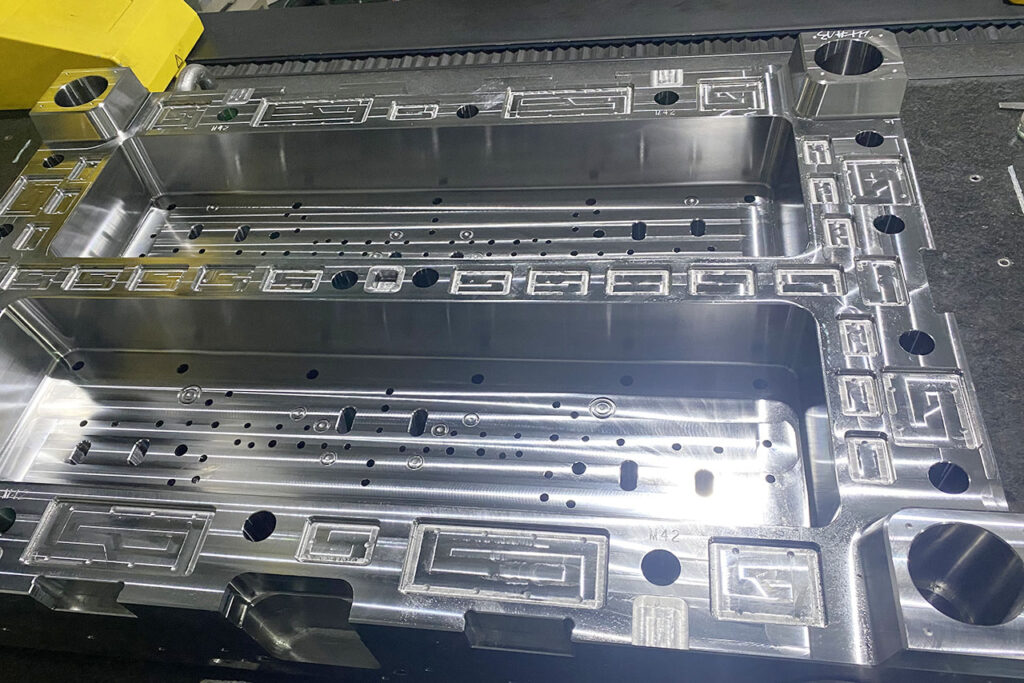
Plastic Injection Mold Bases Material Selection and Cost Structure
The selection of mold base materials and the associated cost budget must be aligned with the specific product output volume and quality requirements:
Mold Base Materials
Standard Configuration: S50C or 45# carbon structural steel. These materials offer low cost and excellent machinability; after quenching and tempering, they achieve a hardness of 28–32 HRC, satisfying the structural support requirements for most applications.
High-Strength Requirements: For high-pressure injection molding or molds designed for extended service life, high-grade carbon plates or alloy steels should be selected to ensure the ability to withstand extreme pressures.
Cost Breakdown
Processing Costs: Constituting 40%–50% of the total cost, this represents the largest expenditure category. It encompasses various manufacturing processes such as CNC machining, EDM (Electrical Discharge Machining), and heat treatment.
Material Costs: Accounting for 20%–35% of the total cost, the steel used for the mold core serves as the primary variable; the price of imported materials is significantly higher than that of domestically produced materials.
Other Expenses: Design, mold trials, and administrative overhead (including profit margins) typically account for approximately 20%–40% of the total cost. Complex mold structures—such as multi-cavity designs or systems incorporating hot runners—will result in a significant increase in both design and mold trial costs.