
Mouldbase: Plastic Mold Base, Injection Mold Base
In modern industry, whenever the mass production of goods is involved—such as automobiles, aerospace components, daily necessities, toys, home appliances, communication equipment, and medical products—the manufacturing process typically relies on molds. A mold base, specifically, is a semi-finished assembly for plastic injection and die-casting molds, comprising various plates and components. From a functional perspective, the mold base provides support, positioning, and cooling capabilities for the molding section (the internal mold components); consequently, a high-quality mold base exerts a critical influence on the precision of the finished injection-molded or die-cast products, production efficiency, and the overall service life of the mold.
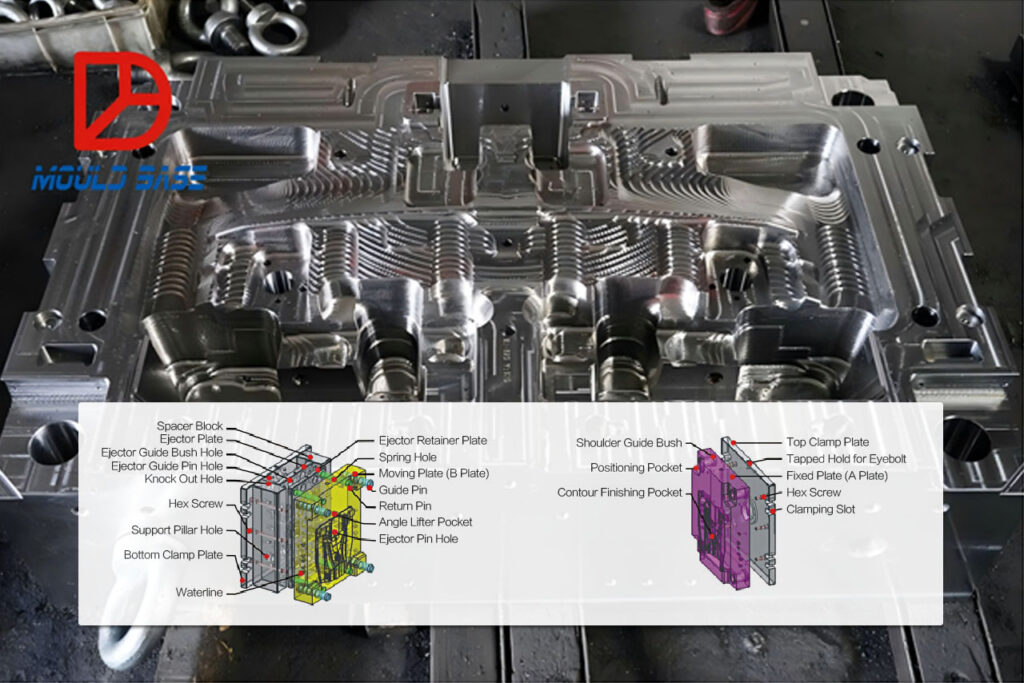
Shown above is a diagram illustrating a typical mold base structure. The section on the right is referred to as the upper mold, while the section on the left is called the lower mold. During the injection molding process, the upper and lower molds first close together, allowing the plastic material to take shape within the molding cavities of both sections. Subsequently, the molds separate, and the finished product is ejected—primarily through the action of the ejection mechanism located within the lower mold. The configuration of the upper mold (or “front mold”) typically comprises the molding cavities (whether formed by inserts or machined directly into the plate), the runner system (including hot nozzles, hot runners, or cold runners), and the cooling system (water channels). The configuration of the lower mold (or “rear mold”) includes the molding cavities, the ejection mechanism (such as ejector plates, pins, sleeves, and angle pins), the cooling system, and various fixing components (such as support pillars, spacer blocks, and guide pillars for the ejector plate).
Whether for injection molding or die casting, the actual molding process takes place only after the A-plate and B-plate have been clamped together under high pressure; consequently, these A/B plates are regarded as the core components of the entire mold assembly. In applications demanding superior strength and durability, high-grade carbon steel plates or high-strength alloy steels are selected for manufacturing to ensure the plates can withstand extreme pressures and rigorous operating conditions.
For molds producing parts with specific surface finish requirements (such as high-gloss polishing or texturing), mold manufacturers typically opt for higher-grade mold steels. These premium steels are utilized in the form of inserts, which are then fitted into the A/B plates; this approach strikes an optimal balance between enhancing the quality of the finished product and maintaining effective cost control.
DYMOULDBASE: Working since 2000
For many mold manufacturers, their core competencies lie in mold design, the precision machining of inserts, component assembly, injection/die-casting trials, and post-production maintenance. By partnering with a mold base manufacturer that possesses reliable material sourcing and stable machining capabilities, these manufacturers can focus their efforts on leveraging their own core strengths, effectively minimize the substantial capital investment typically required for machining equipment, and simultaneously reduce long-term maintenance costs.
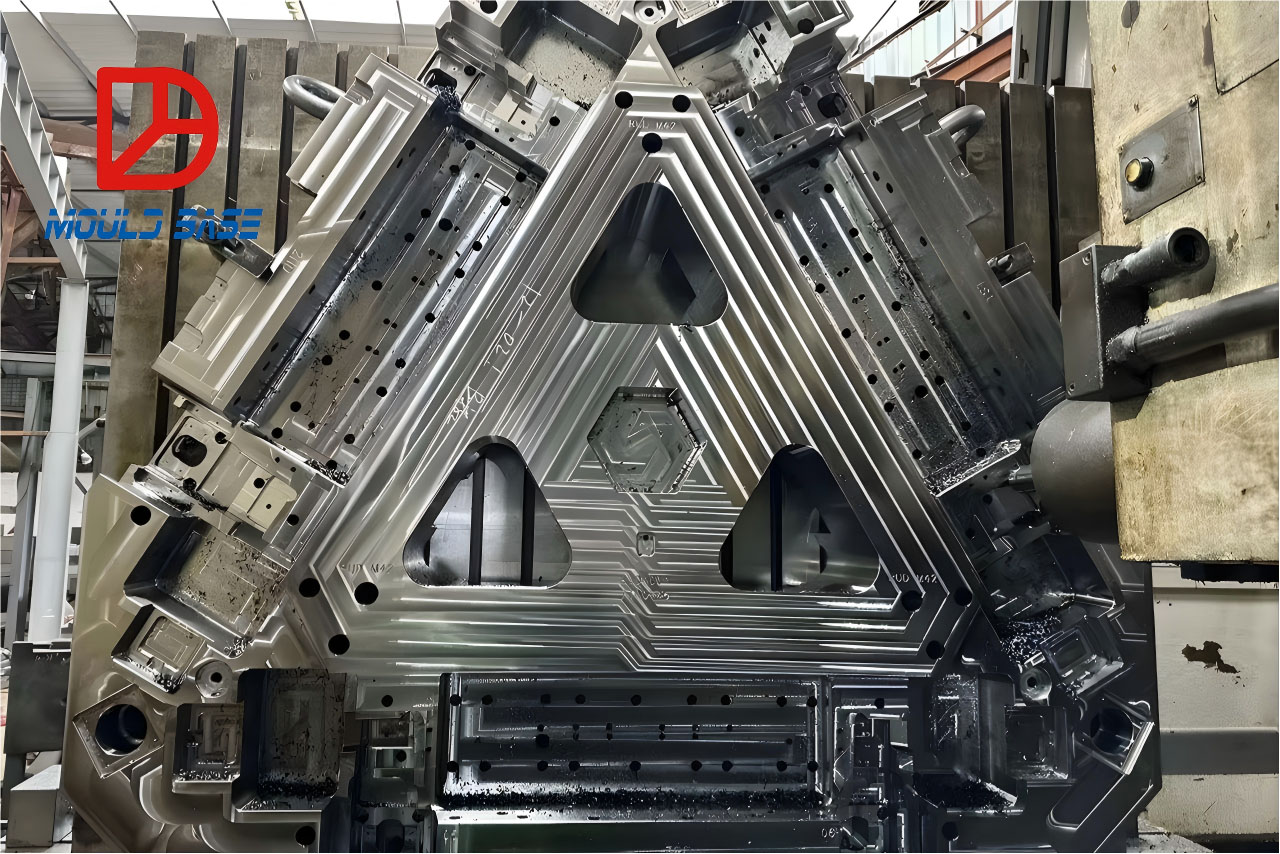
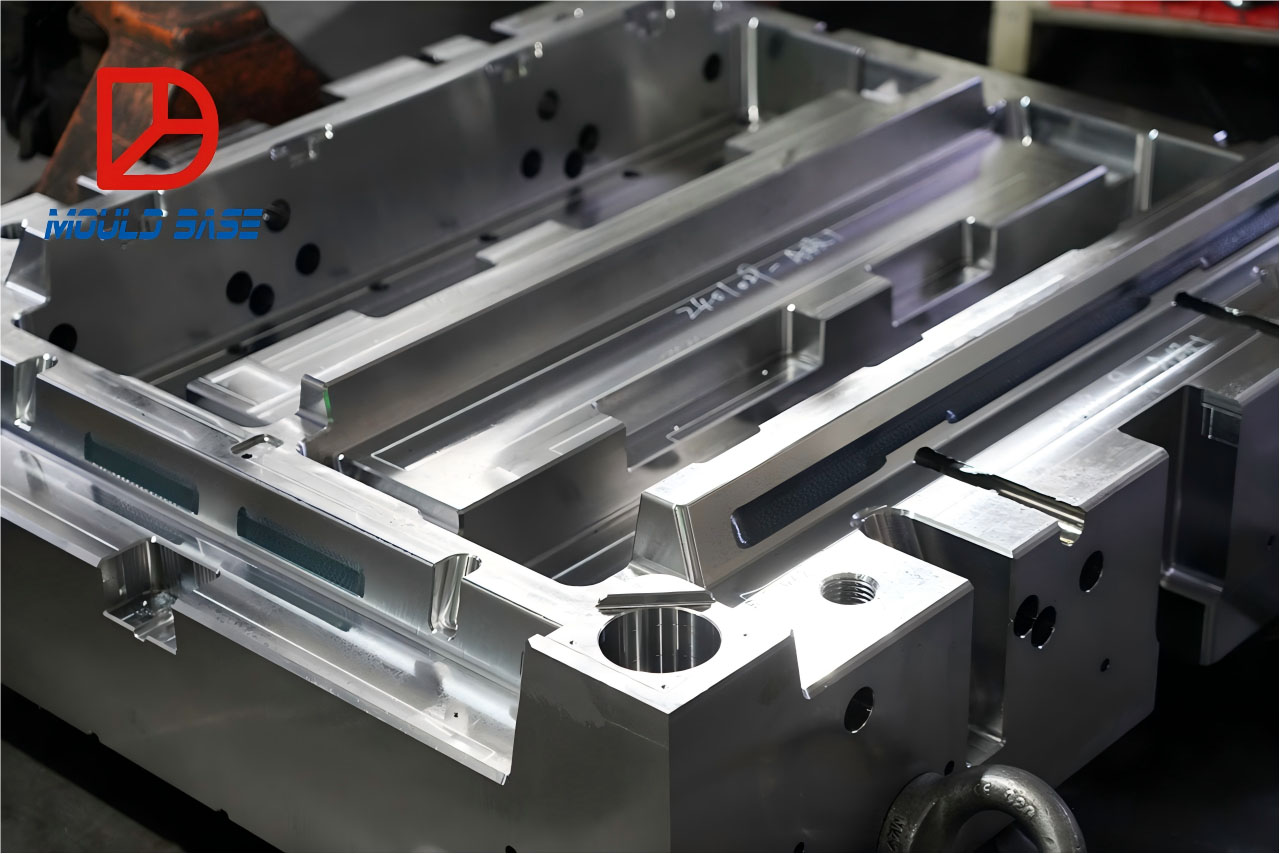
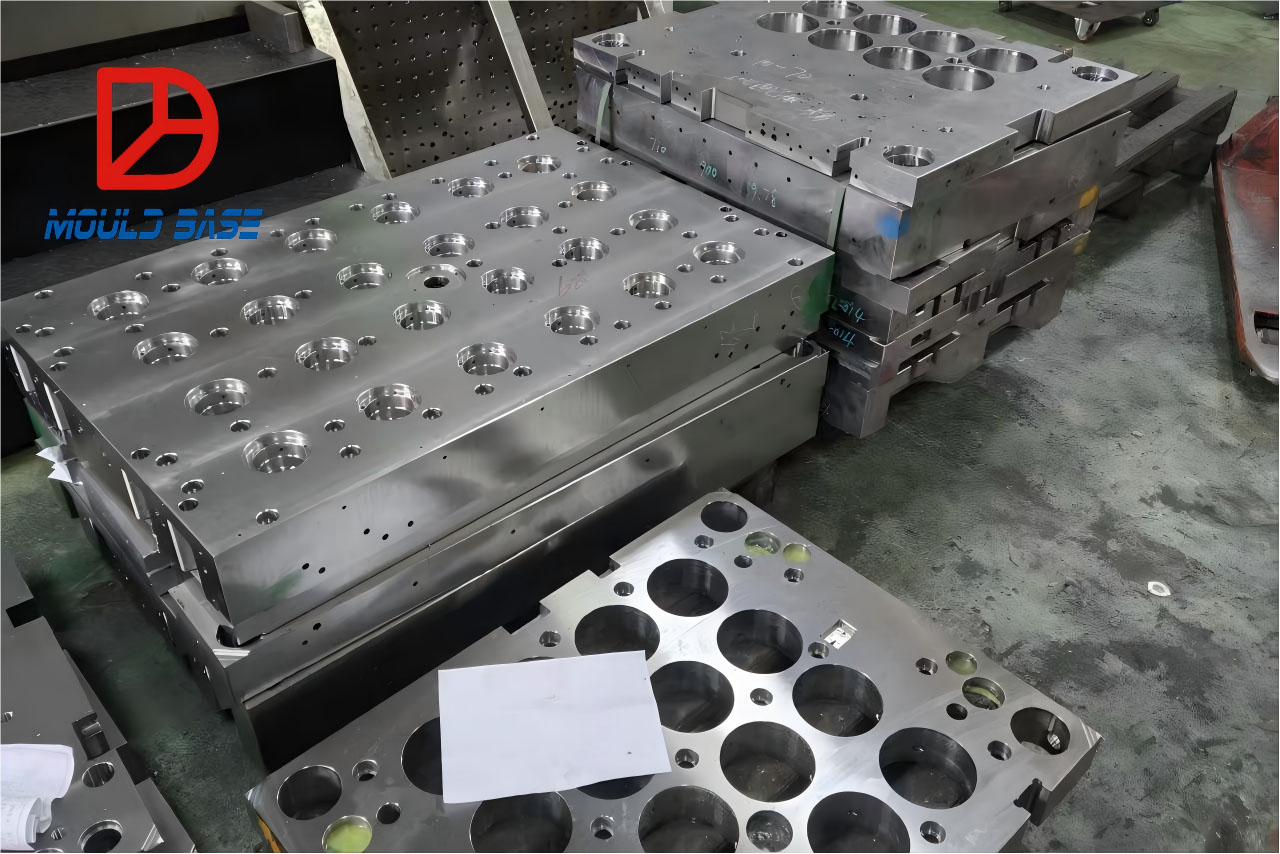
Mold base products are primarily categorized into standard mold bases and custom (non-standard) mold bases.
Standard mold bases are products that integrate the most common plate specifications and processing requirements. Thanks to fully automated manufacturing processes, modern standard mold bases offer significant advantages in terms of quality consistency; moreover, their convenient procurement model ensures a smoother and faster overall transaction process.
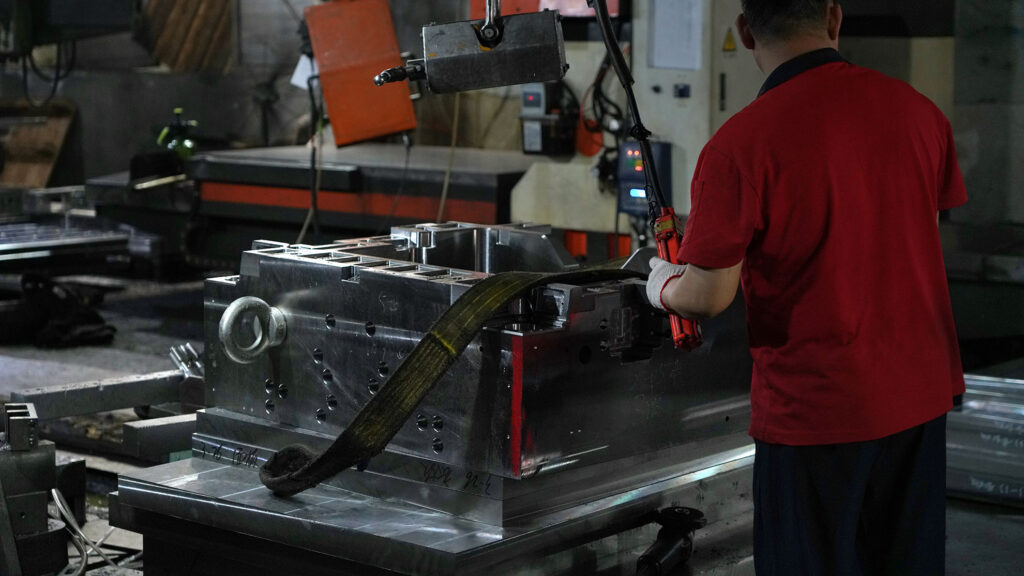
Custom Mold Base & Machining
For mold bases subject to stringent performance requirements or those of exceptionally large dimensions—given their intricate internal designs and specific demands regarding steel plate selection—mold manufacturers typically opt for custom-made solutions.
The quality of a custom mold base hinges upon consistent control exercised throughout the entire process, from raw material selection to final machining.
DY utilizes premium medium-carbon steel and alloy mold steel sourced from top-tier domestic and international steel mills. Furthermore, every piece of material undergoes rigorous ultrasonic inspection to ensure the most stable and reliable material supply for our clients. DY maintains a strict classification system for raw materials and firmly adheres to a “no-mixing” principle, thereby guaranteeing the authenticity and integrity of our products and providing our customers with complete peace of mind.
For orders requiring exceptional precision, DY offers processing and production services within its High-Precision Workshop. This facility is equipped with a sophisticated climate control system and features production lines centered around advanced machining centers—primarily from Makino and Okuma—thereby providing the highest level of machining assurance for these specialized orders.
The general transaction workflow for custom-made mold bases is as follows:
- The client electronically transmits processing files (e.g., in STL format), material specifications, and any specific precision requirements (if applicable) to the Sales and Order Processing Department at LKM (Long Kee).
- DY reviews the quotation details, conducts a preliminary assessment of material inventory and processing feasibility, and subsequently provides a formal quotation along with an estimated delivery schedule. Should any clarifications be required during this phase, DY will communicate directly with the client.
- DY performs internal engineering analysis on the client’s design files and schedules the production work for the appropriate workshop within the manufacturing department.
- Upon completion of the machining process, the parts undergo rigorous inspection and necessary assembly before being delivered to the client.
The estimated lead time for machining is determined based on factors such as the volume of material removal required for the mold base and the current workload of DY’s production lines.